


Price: [price_with_discount]
(as of [price_update_date] – Details)
[ad_1]
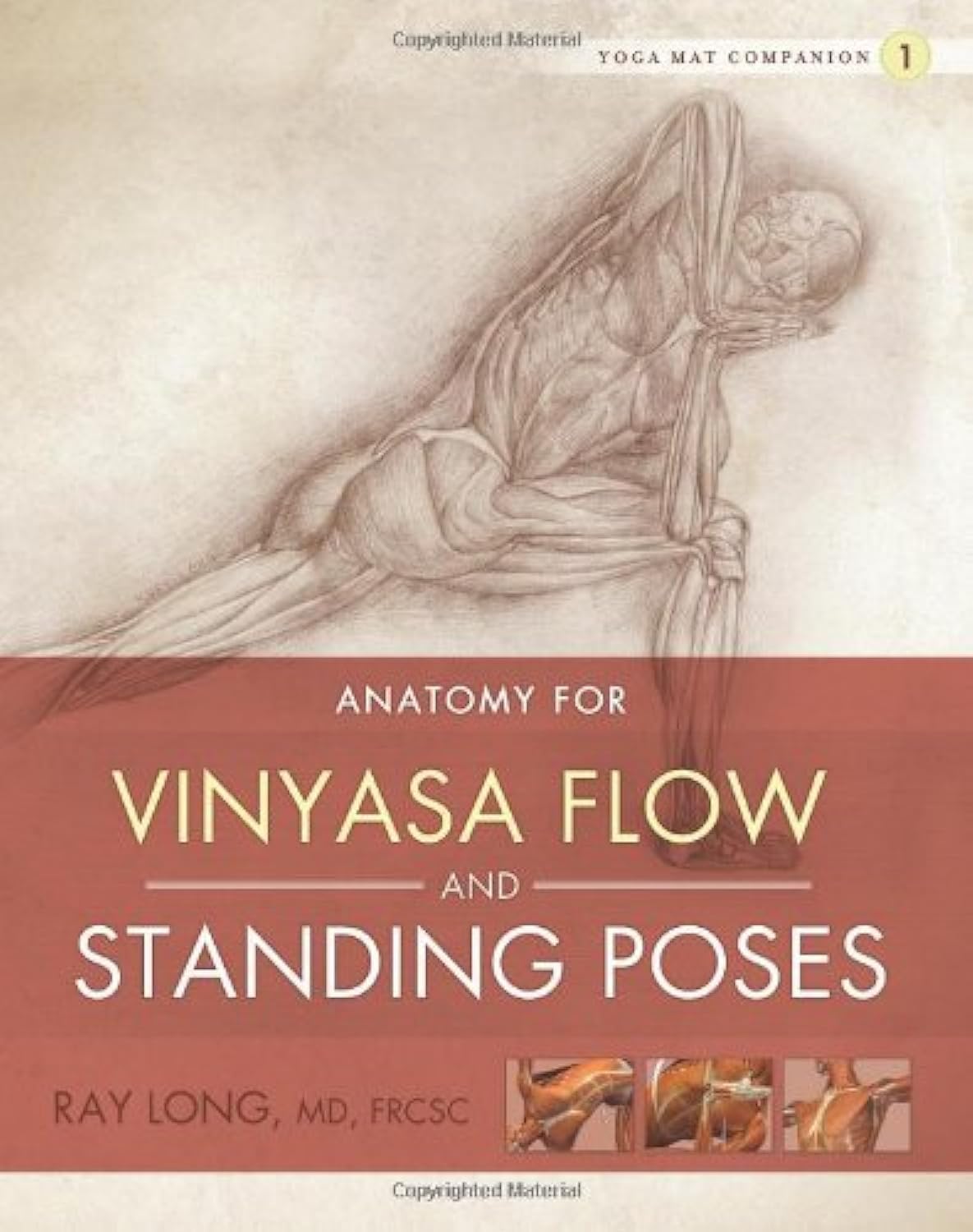
Orthopaedic surgeon Ray Long blends modern science and the ancient art of hatha yoga to create an indispensable resource for every yoga practitioner — from beginners to experts. A scientific approach to understanding the practice of hatha yoga: through full-colour, three-dimensional illustrations of major muscles, tendons, and ligaments, Ray Long describes the correct positioning of hatha yoga poses (asanas) and their benefits. Specific anatomical descriptions highlight which muscles to activate in each pose, bringing the experience of the pose to new sensory heights. A novel approach to learning yoga poses: each of the four mat companions focuses on one type of yoga pose: standing poses, forward bends and hip openers, back bends and twists, and arm balances and inversions. The illustrations and descriptions describe the major movements that enable the poses, how to deepen the posture, and sequences of muscle activation. The concealed wire-bound pages make the books perfect mat resources during practice.

Anatomy for Vinyasa Flow and Standing Poses
Yoga Mat Companion 1
Ray Long MD
Building upon the foundation set in the Scientific Keys series, Dr. Ray Long developed the Yoga Mat Companion series, which offers in-depth instruction and guidance in specific categories of yoga poses. The first book in the series introduces readers to Vinyasa Flow and Standing poses through beautifully illustrated, step-by-step instructions on how to use scientific principles to obtain the maximum benefit from their practice. Each book in the Mat Companion series includes the Bandha Yoga Codex, a simple five-step process that can be applied to any pose to improve strength, flexibility, and precision — no matter what style of yoga you practice.
Excerpts from: Yoga Mat Companion 1 – Anatomy for Vinyasa Flow and Standing Poses – by Ray Long MD

Virabhadrasana II
You can also use a folding chair as a prop to experience expanding the chest (thorax) in this pose. Press down with the hands to lift the ribcage as you bend the forward knee into Virabhadrasana II. This activates the latissimus dorsi and lower trapezius as well as the rhomboids. Then raise the arms into the full pose while maintaining the lift of the chest.

Parsvottanasana
This image gives a view of the muscles that stretch when the upper extremities are in reverse namasté. These include the infraspinatus and teres minor muscles of the rotator cuff and the wrist flexors. Although the front-leg hamstrings and gluteals are the main focus of the pose, you can accentuate the stretch of the back-leg hamstrings and gastrocnemius/soleus complex as described.

Vrksasana – Step 4
Contract the deep external rotators to open the hips and create space in the front of the pelvis. Notice the gluteus minimus in this pose. This muscle is deep to the gluteus medius and has different functions, depending on whether the hip is flexed, extended, or neutral. In Vrksasana, the standing hip is neutral, so the gluteus minimus works to stabilize the ball of the hip joint in the socket. Also look at the interplay between the gluteus minimus and the deep external rotators illustrated here. This combination of muscles stabilizes the hip of the standing leg.

Trikonasana – Step 1
Activate the psoas and its synergist (the pectineus) to flex the trunk over the thigh. Use the quadriceps to straighten the knee. Then refine the position of the kneecap, using the sartorius to adjust for external rotation and the tensor fascia lata for internal rotation.
Publisher : Independent Publisher
Publication date : 1 January 2011
Edition : Illustrated
Language : English
Print length : 218 pages
ISBN-10 : 1607439433
ISBN-13 : 978-1607439431
Item weight : 839 g
Dimensions : 8.48 x 0.66 x 10.75 inches
Best Sellers Rank: 73,851 in Books (See Top 100 in Books) 397 in Fitness Training 449 in Fitness & Exercise 916 in Biological Sciences
Customer reviews: 4.8 4.8 out of 5 stars (294) var dpAcrHasRegisteredArcLinkClickAction; P.when(‘A’, ‘ready’).execute(function(A) { if (dpAcrHasRegisteredArcLinkClickAction !== true) { dpAcrHasRegisteredArcLinkClickAction = true; A.declarative( ‘acrLink-click-metrics’, ‘click’, { “allowLinkDefault”: true }, function (event) { if (window.ue) { ue.count(“acrLinkClickCount”, (ue.count(“acrLinkClickCount”) || 0) + 1); } } ); } }); P.when(‘A’, ‘cf’).execute(function(A) { A.declarative(‘acrStarsLink-click-metrics’, ‘click’, { “allowLinkDefault” : true }, function(event){ if(window.ue) { ue.count(“acrStarsLinkWithPopoverClickCount”, (ue.count(“acrStarsLinkWithPopoverClickCount”) || 0) + 1); } }); });
[ad_2]











Reviews
There are no reviews yet.